
Service
Tree Trimming & Pruning in Fort Bend County
Selective cuts that protect canopy health.
Most yard trees need attention every two to four years: deadwood out, a too-dense canopy thinned, and wind load reduced before hurricane season. Our climbers make selective cuts to ANSI A300 pruning standards, and the crew hauls off every branch before we leave.
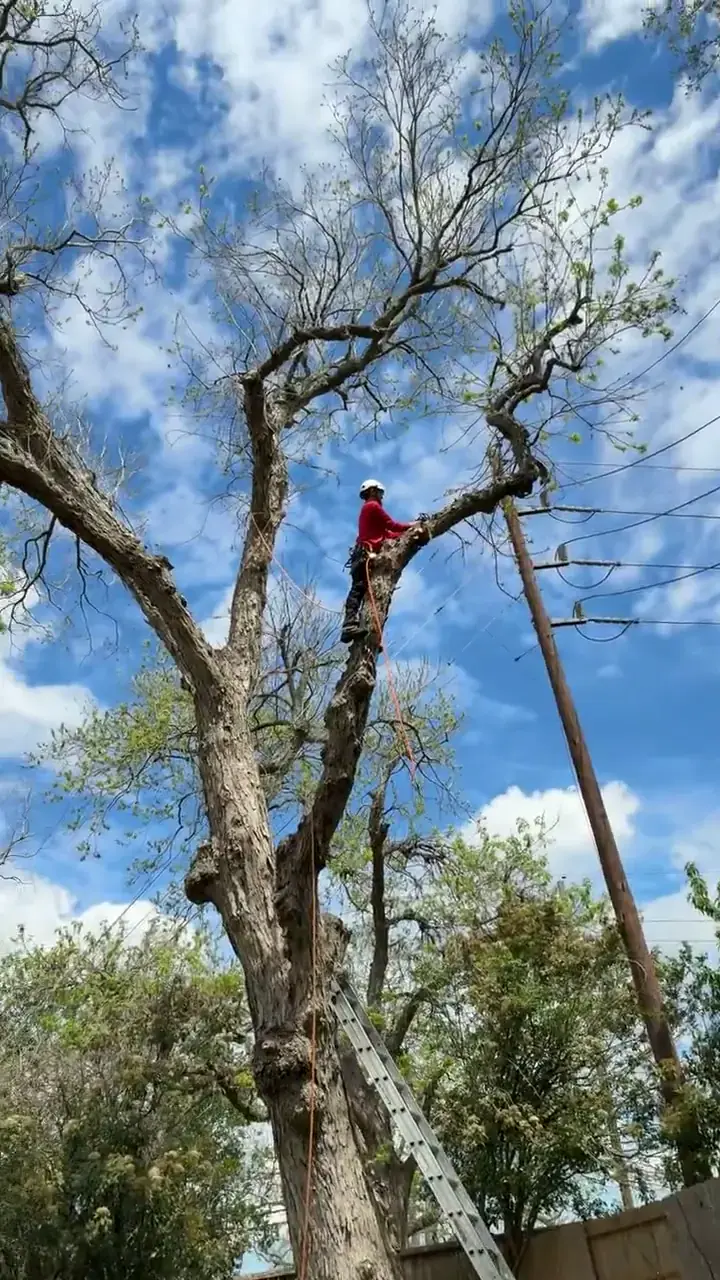
Every job, the same standard
What’s included
Crown thinning, deadwood removal, and structural pruning
Clearance trimming over roofs, driveways, and the service drop to your house
Cuts made to ANSI A300 pruning standards — no topping
Climbing crew for trees a bucket truck can't reach
Bucket truck for fast, safe access where the yard allows it
Oak work timed and sealed to avoid spreading oak wilt
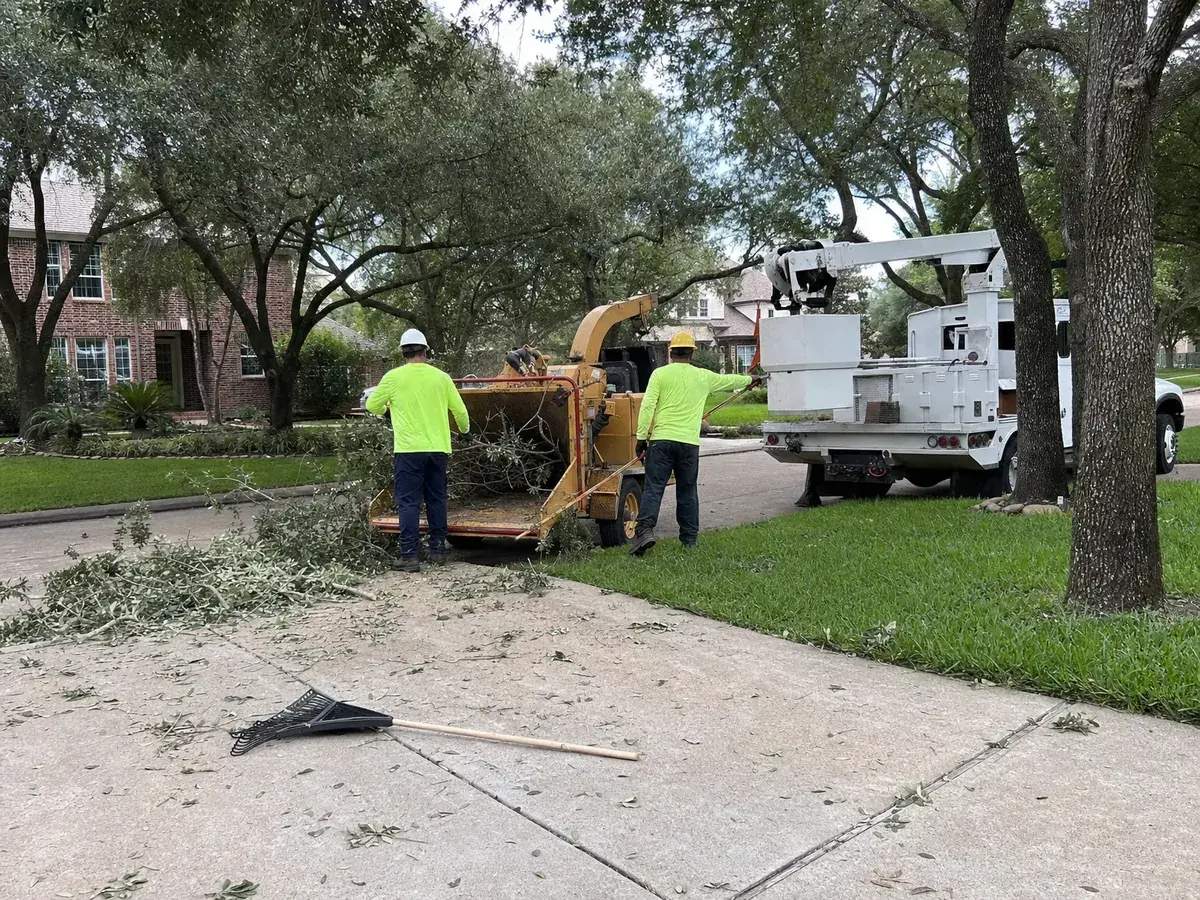
All branches chipped or hauled off, yard raked and blown clean
On the job
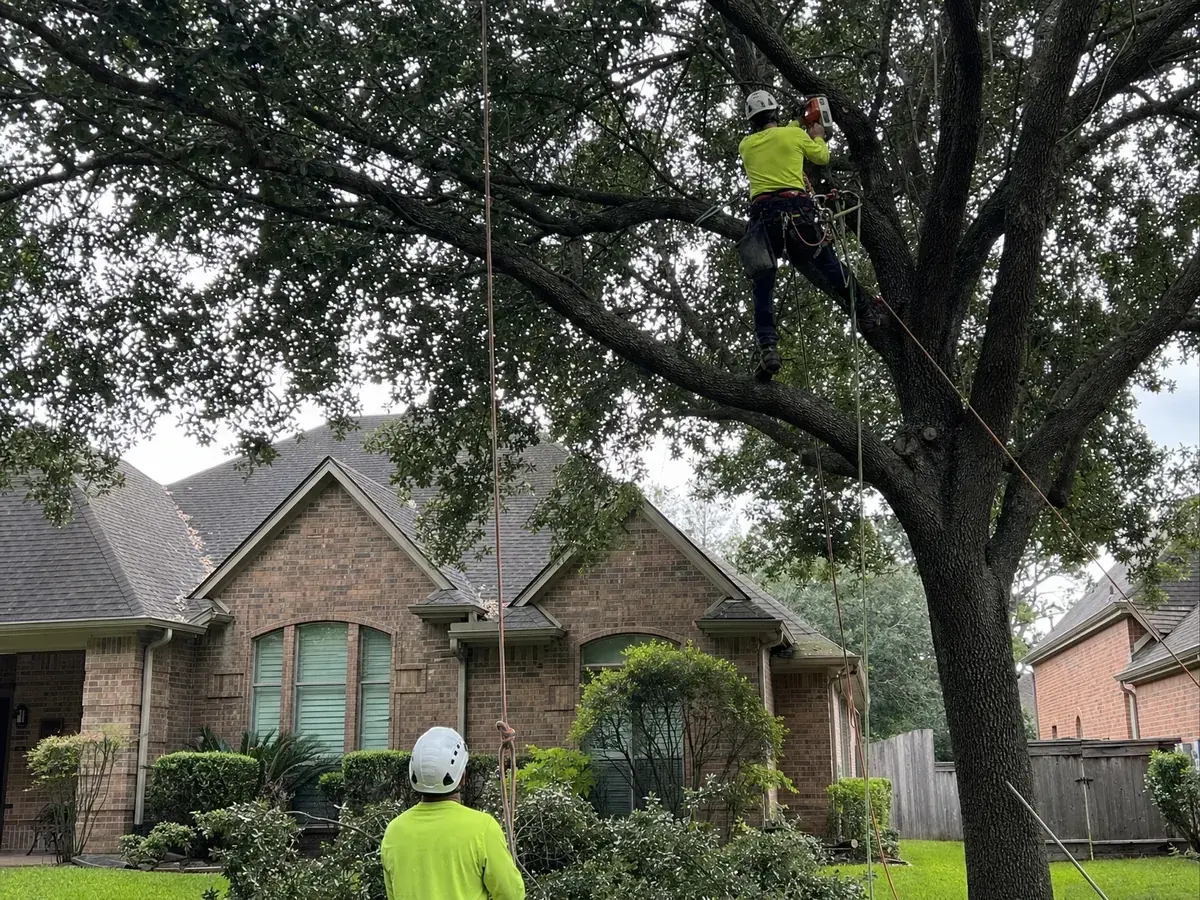
Tree Trimming & Pruning in action
Four steps, no surprises
How it works
01
Free on-site estimate
We walk the property, identify the species, and tell you what actually needs work, not what we can sell you.
02
Schedule & prep
We confirm gate access, mark sprinkler heads, and send your HOA our insurance certificate if they need it.
03
Trimming day
The crew sets up ground protection, then climbs or uses the bucket truck to make selective cuts to spec.
04
Cleanup & walkthrough
Every branch is chipped or hauled off. We walk the finished work with you before we invoice.
Free, written estimates
Every job is priced after we see it in person. You get a fixed written price before any work starts, and cleanup is always included.
Where we work
Areas served
Tree Trimming & Pruning across Fort Bend County and Katy, from our offices in Rosenberg, Sugar Land, Katy, and Needville.
Before you book
Guides that answer the money questions.
Pricing
How Much Does Tree Trimming Cost in Houston? (2026 Price Guide)
Most Houston tree trims run $250–$900 per tree. Here's the full price table by size — and why the cheapest bid usually costs the most.
Local
Sugar Land Tree Rules: The Complete Guide to Permits, HOAs, Fines, and Replanting
Sugar Land regulates tree removal twice — once at city hall, once at your HOA. Here's the complete map of both processes, in one place.
Tree care
Tree Trimming & Pruning in Houston: The Complete Guide
Oak wilt windows, the 25% rule, crown reduction vs topping, DIY limits, and real costs — every Houston pruning question we get, answered in one guide.
Common questions
Tree Trimming & Pruning FAQ
How often should I trim my trees?
Most established shade trees in Fort Bend County do well with a structural trim every three to five years. Younger trees, under about ten years old, benefit from a lighter trim every two to three years, because early pruning sets a strong central trunk and prevents the split trunks that fail in storms later. Fast-growing species and trees over a roof may need attention more often. At the free estimate we'll tell you honestly whether your tree needs work this year or can wait.
When is the best time to trim oak trees in Texas?
Prune oaks in the dormant window, November through January, or in the heat of July and August. Avoid February through June, when the sap-feeding beetles that spread oak wilt are most active and a fresh cut can let the fungus in. When oak work can't wait, such as a storm-damaged limb over the roof, we seal every cut with pruning paint right away. Crape myrtles, elms, and pecans are more flexible and can be trimmed most of the year.
Will trimming spread oak wilt?
Not when it's done correctly. Oak wilt spreads through sap beetles carrying spores to fresh wounds and through root grafts between neighboring oaks. We schedule oak pruning outside the February-to-June beetle season whenever possible, seal oak cuts immediately when work can't wait, and clean saws and climbing gear between oak jobs. If we see warning signs such as sudden leaf loss in the crown, we'll point them out at the estimate.
Do you trim trees near power lines?
It depends on the line. CenterPoint controls the high-voltage lines running pole to pole, and only their line-clearance crews may work inside that zone; we coordinate with them and handle everything outside it. The service drop, the single line from the pole to your house, is something we can trim around safely with controlled rigging so nothing falls on the line.
Is topping a tree ever a good idea?
No. Topping, cutting the main branches back to stubs, causes a flush of weakly attached sprouts, invites decay, and often makes a tree more likely to fail in a storm. If a tree is too big for its space, a proper reduction cut or, in some cases, removal is the better answer. We'll explain the options at the estimate.
Do you clean up after trimming?
Yes, cleanup is always included. Branches are chipped or hauled off on our own trucks, and the yard, driveway, and roof edges are raked and blown clean before we leave.
Get a free tree trimming & pruning estimate
Local, family-owned crews, fast scheduling, and storm emergencies answered 24/7.
Other services
Other things we do.
Service
Tree Removal
Safe takedowns from any size tree.
Service
Stump Grinding & Lot Clearing
Below grade, roots out, ground ready for sod.
Service
Hauling & Debris Removal
Dump-truck hauling for trees, brush, and lot debris.
Service
24/7 Storm Response
When wind takes a tree down, we answer the phone.
Service
Sprinkler & Irrigation Repair
Broken heads, stuck valves, mystery leaks — fixed with up-front pricing.
Service
Sprinkler System Installation
Designed for Gulf Coast clay, St. Augustine turf, and Texas water rules.
Service
Irrigation Maintenance & Winterization
Tuned in spring, protected before the freeze.
Service
French Drains & Yard Drainage
Standing water has a cure, even in Fort Bend clay.
Service
Landscape Lighting Design & Installation
Your landscape works all day. Lighting lets it show off at night.
Service
Landscape Lighting Repair
Dark fixtures, dead zones, and chewed wire — any brand, fixed.